
Last updated November 16, 2026
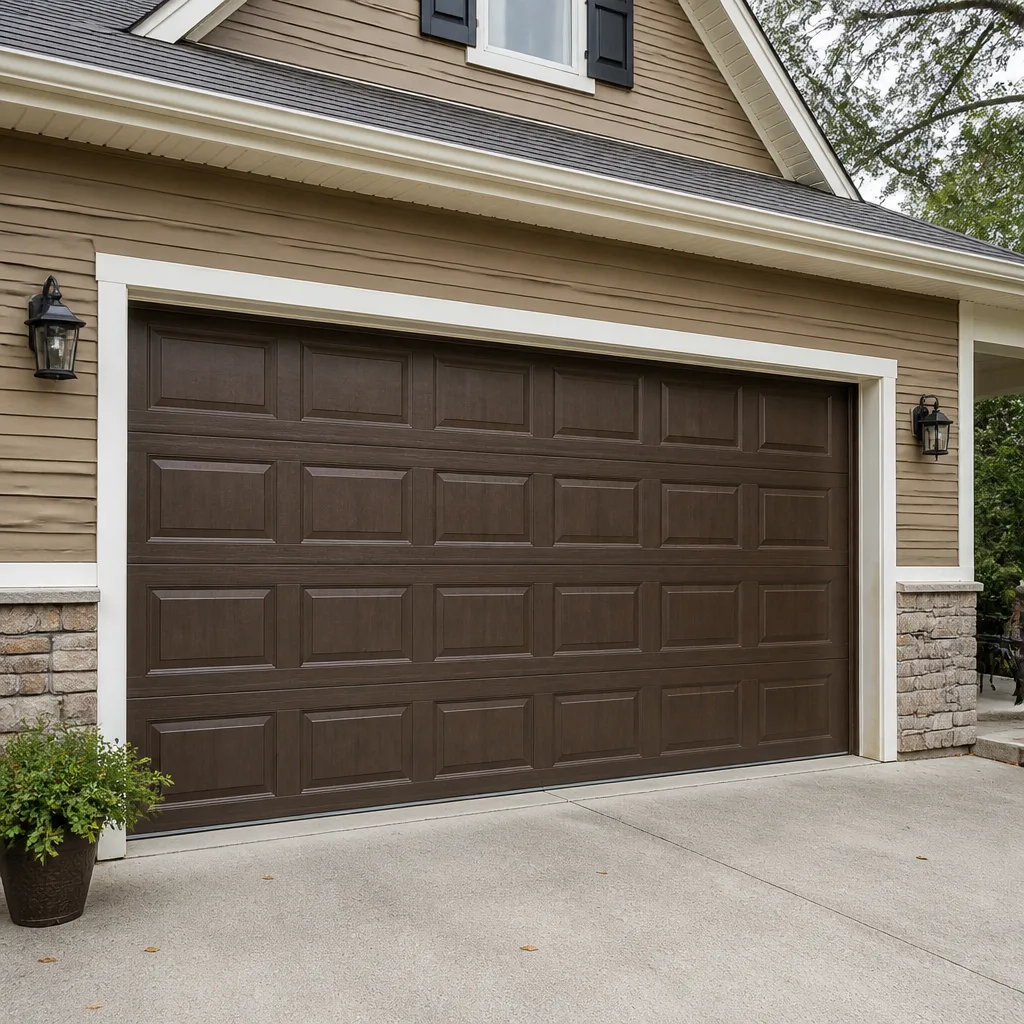 Raised-panel steel
 Carriage house
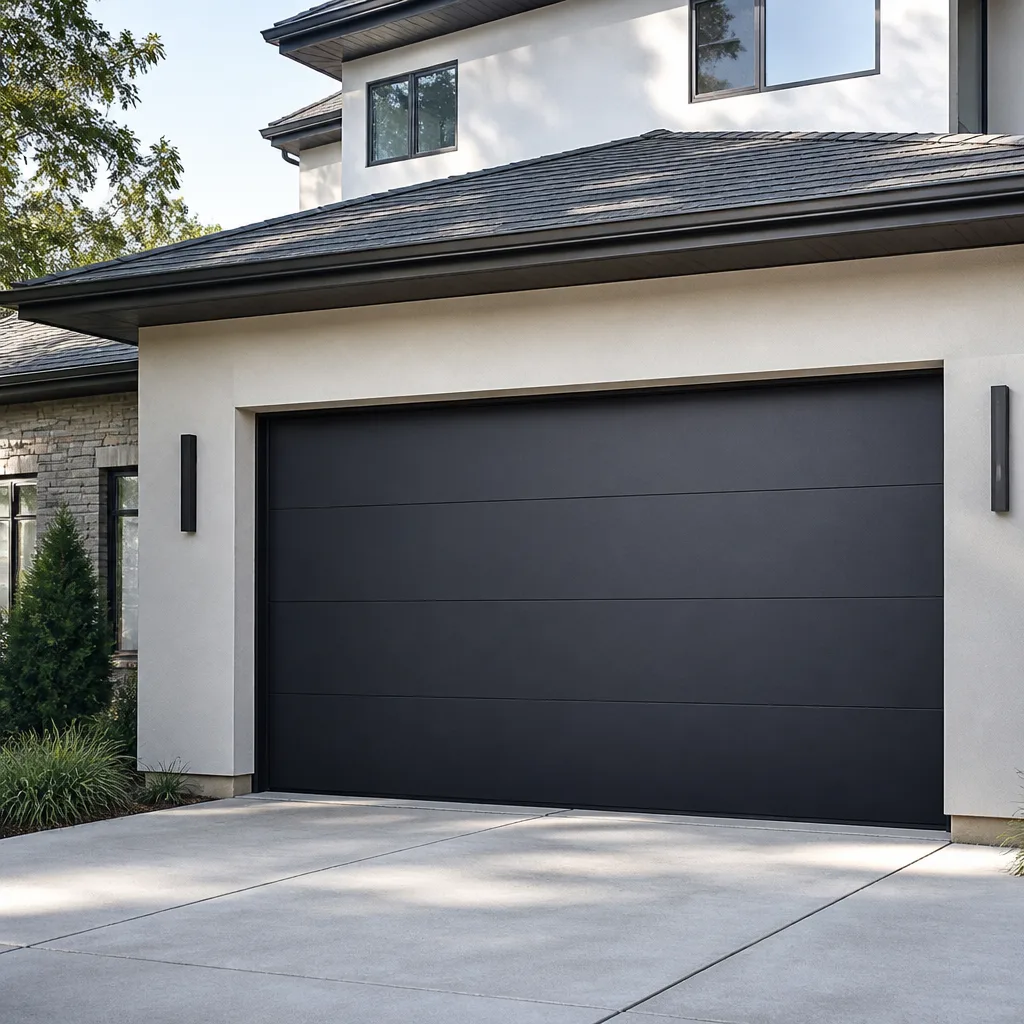 Modern flush
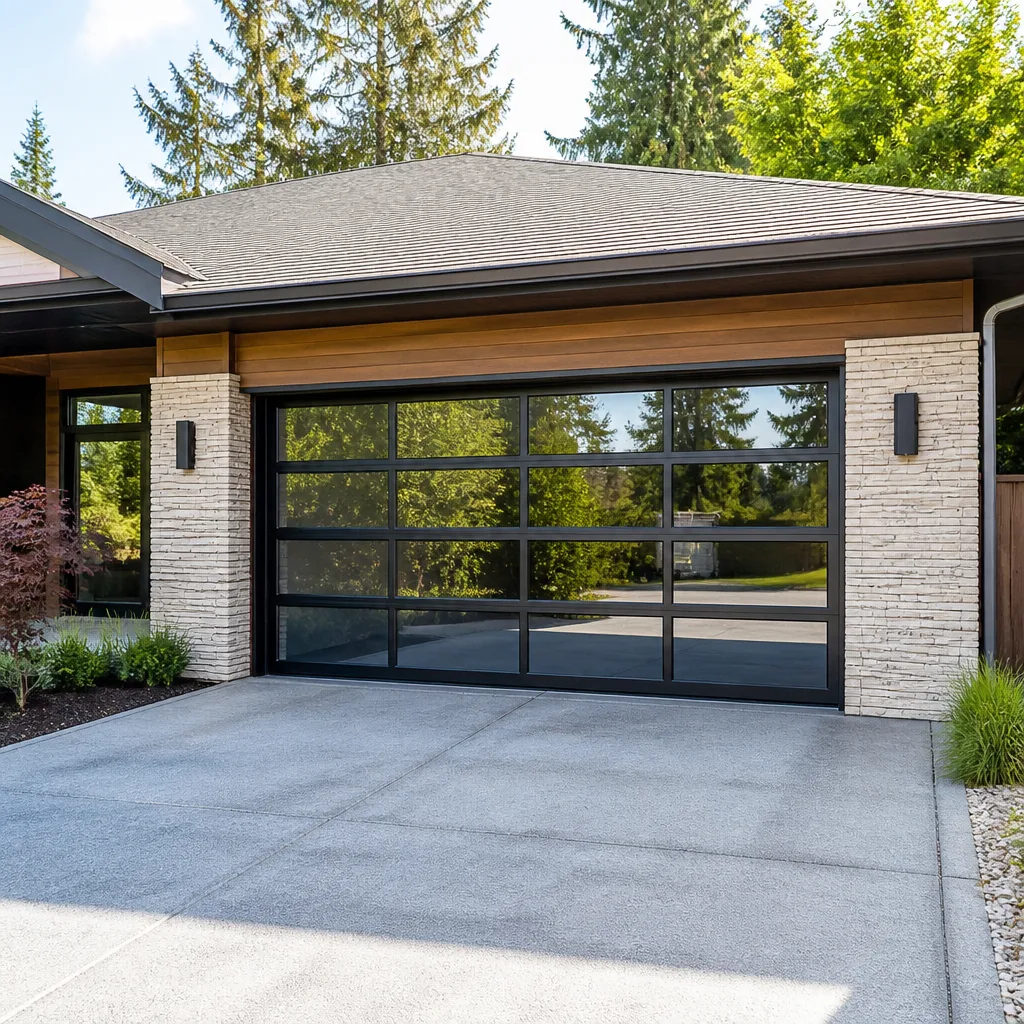 Full-view glass
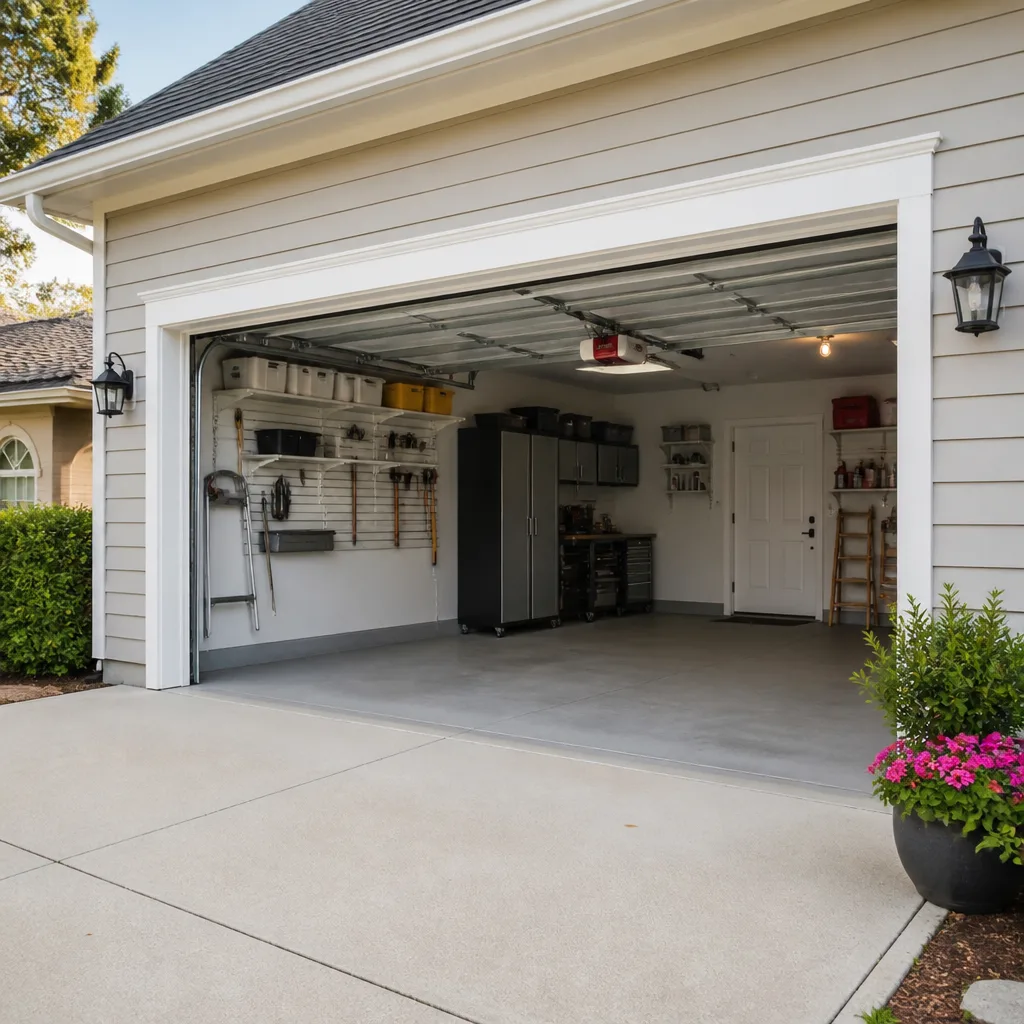 LiftMaster openers
 Chamberlain openers
Full 25-point door and opener safety check with every visit - springs, cables, rollers, tracks, and your LiftMaster or Chamberlain opener included
You get a price before we start. It does not change when the pro arrives.
Get your free estimateGarage Door Repair Maintenance Schedule: What to Do and When
Most garage door maintenance advice tells you to check the door twice a year and calls it done. That calendar ignores the two things that actually decide when parts wear out: how many times your door opens and closes, and what the weather has been doing to the metal and the lubricant. A garage door isn’t a furnace on a seasonal clock. It’s a machine with a finite number of cycles in every spring, roller and hinge. In McAllen, where the door faces heat for most of the year and the occasional tropical system rolls through, the timing of an inspection matters more than the month on the box. This guide builds a schedule around cycles, local seasons and the specific hardware in your door, so you check the right parts at the right time instead of following a generic checklist that skips the variables.
Quick Answer
A sound garage door maintenance schedule pairs monthly homeowner checks (visual inspection, balance test, lubrication) with seasonal tasks tied to local weather – in McAllen, that means an inspection in April before the summer heat and again in November after storm season – plus one professional inspection a year for springs, cables and opener adjustments that need tools and training. The right frequency for your door depends on how many cycles it runs, not just which month it is.
Styles & brands we work with
- Raised-panel steel
- Carriage house
- Modern flush
- Full-view glass
- LiftMaster openers
- Chamberlain openers
Table of Contents
- Why Cycle Counts Beat Calendars
- Estimate Your Annual Cycles
- Tier 1: Monthly Homeowner Tasks
- Tier 2: Seasonal Tasks for McAllen
- Tier 3: Annual Professional Inspection
- The Right Lubricant for Each Component
- What a Maintenance Log Saves You
- Common Mistakes to Avoid
Why Cycle Counts Beat Calendars
A torsion spring doesn’t wear out on a date. It wears out after a set number of cycles, and every open and close counts as one. The same is true of rollers, hinges and the opener’s internal gears. When the professional trade says a spring is rated for a certain cycle life, that’s a finite budget of movements. A household that opens the door four times a day burns through that budget far slower than one that opens it twelve times a day, and a calendar that treats both the same can’t tell you when to expect a failure.
That’s why a March inspection on one McAllen street means something different than a March inspection two blocks away. The variables that matter:
- Daily cycles: how many times each person in the household leaves and returns, plus any deliveries or errands.
- Seasonal load: extra cycles during school terms, holidays or storm prep when the door gets used more.
- Local heat: South Texas summers stress the spring steel and dry out lubricant faster than a cooler climate would, which is one reason a McAllen door benefits from more frequent checks than the national advice suggests.
- Hardware age: a door from a well-known line (a Clopay or Amarr model, say) is engineered for a certain cycle rating, but real-world wear tracks usage, not the manual.
The practical takeaway: set your inspection rhythm by cycle count, then use a calendar as a reminder to look, not as the reason to look. When we walk a McAllen homeowner through their door, the first questions we ask are about daily use, not the date of the last service.
Estimate Your Annual Cycles
You can get a workable number in a minute. Count how many times the door goes up and down on a typical weekday, multiply by the days the household operates at that pace, then add the weekends and any seasonal spikes. A simple formula:
- Count a weekday. For each person with a car, that’s usually two cycles (out and back). Add any delivery or trash-day openings. Multiply the total by five.
- Count a weekend day. Most households run fewer cycles on a rest day. Multiply that number by two, and remember we’re closed on Saturday if you’re planning service calls.
- Add a seasonal buffer. School terms, holidays and storm prep add cycles. A 10-15% buffer covers the busy weeks.
- Multiply by 52. That’s your rough annual cycle count.
Here’s how it lands for a two-car McAllen household. Two drivers at two cycles a weekday, plus a couple of extra openings a week, comes out to roughly 1,500 to 1,600 cycles a year. A one-car home runs closer to 800. A household that uses the garage as the main entry point, with kids coming and going, can push past 2,000. Write your number down. It’s the anchor for the rest of this guide.
Once you know your annual cycles, match your inspection schedule to it. Under about 1,000 cycles a year, an annual professional inspection plus the homeowner checks below is plenty. Between 1,000 and 2,000, keep the same rhythm but treat the monthly checks as non-negotiable. Above 2,000, or if the door is used commercially or by a large family, plan on a professional look more often. If you’re not sure where your door stands, a garage door repair visit is a good time to get a baseline on the springs and opener.
Tier 1: Monthly Homeowner Tasks
These are the things you can safely check yourself in a few minutes, ideally on the same day each month. None of them require tools beyond a rag and a lubricant, and none of them put your hands near the springs or cables.
- Visual sweep. Look at the springs, cables, rollers and hinges. Note any fraying on the cables, gaps in the spring coils, or loose hinges. Don’t touch the springs or cables – more on why below.
- Balance test. Disconnect the opener (pull the release handle) and lift the door halfway by hand. A balanced door should stay put when you let go. If it drifts up or down, the springs or the track are out of adjustment and it’s time for a professional.
- Listen for changes. A door that starts squeaking, grinding or banging is telling you something. Note what changed and when.
- Check the safety reverse. Put a small object (a roll of tape works) in the door’s path and close it with the opener. The door should reverse on contact. If it doesn’t, stop using the opener and call for service.
- Wipe the tracks. A dry rag along the track removes dust and grit. Don’t lubricate the tracks – they’re meant to stay dry.
Log each check in a notebook or a note on your phone: date, what you saw, what you heard. That log becomes the most useful document you own when something finally breaks, because it tells the technician what’s been changing and when. It also keeps you honest about how often the door is actually being checked.
Tier 2: Seasonal Tasks for McAllen
McAllen’s climate gives you two clear inspection windows a year, and both are tied to real conditions rather than a generic “spring and fall” habit.
April: before the summer heat
South Texas summers dry out lubricant and expand metal. An April check catches a door that wintered fine but is about to face four months of heat. Lubricate the moving parts (see the section below for which products go where), test the balance and safety reverse, and note anything that’s been squeaking. If your door is a smart opener system from Genie or LiftMaster, this is also the right time to check that its safety sensors and battery backup are working, since heat stress on the opener’s electronics shows up in summer.
November: after storm season
Tropical systems bring wind, debris and power interruptions. After the season passes, check for bent tracks, misaligned panels, and any debris that worked its way into the rollers or hinges. Test the manual release so you know it works if the power drops again. A door that took a hard shake in a storm can look fine and still be off its track. If you’re on the fence about what you’re seeing, a garage door repair call in November is often the difference between a small adjustment and a bigger repair later.
Between the two windows, keep the monthly checks going. The April and November inspections are the deep passes; the monthly ones are the monitoring. If a big storm passes through mid-season, add a quick visual check the day after, before you use the door again.
Tier 3: Annual Professional Inspection
Some checks belong to a trained technician, full stop. The annual professional inspection covers the parts that require tools, measurement or training, and it’s the backbone of a schedule that prevents surprises. What a proper inspection looks like:
- Spring tension check. The technician measures the spring’s performance and looks for fatigue or coil gaps that predict failure. This is the check that saves you from a snapped spring at the worst moment.
- Cable inspection. Cables fray from the inside out, and the damage isn’t always visible to an untrained eye. A technician checks both cables for stretch and wear.
- Roller and hinge wear check. Rollers develop flat spots and hinges loosen. The tech replaces worn parts before they chew up the track.
- Opener adjustment. Force settings, travel limits and safety sensor alignment are all checked and adjusted. On a Chamberlain or Craftstman opener, the manual’s settings are the reference; on a newer smart unit, the technician verifies firmware and sensor pairing.
- Track and panel alignment. A door that’s out of square puts lateral pressure on the springs and opener. The tech checks that the panels run true and adjusts the track if needed.
We’ve seen the same pattern in McAllen homes for years: a door that gets one professional inspection a year rarely fails at a bad time, and a door that gets none tends to fail all at once. Our technicians have up to 12 years of experience, and they work on every major brand, from Genie and Wayne Dalton to Clopay and Amarr, so the inspection matches the actual hardware in your door. The right part for your system is the whole point – a generic fix only delays the next problem.
The Right Lubricant for Each Component
The wrong lubricant is worse than none. A product that works on a roller can attract dirt on a track, and a heavy grease in the wrong place can hold grit against a hinge. Match the product to the part:
- Torsion and extension springs: a purpose-made spring lubricant or a light silicone spray. It keeps the coils moving freely without holding grit.
- Rollers: a silicone-based lubricant, applied lightly, not a heavy grease. Too much attract dust and jambs the roller in the track.
- Hinges: a light oil or silicone spray worked into the pivot points. Wipe the excess.
- Bearings and the opener’s drive screw or chain: follow the opener manual. A Chamberlain or LiftMaster unit will specify what it wants, and guessing wrong can void your setup.
- Tracks: nothing. They stay dry. Lubricant on a track turns it into a dust magnet.
The single most common mistake we see is the all-purpose spray can. It works fine on a hinge and badly on a spring or a track. Read the label, and when in doubt, ask before you spray. A quick call to a garage door opener repair line can tell you what’s safe on your specific opener and what isn’t.
What a Maintenance Log Saves You
Here’s the practical payoff. A neglected door tends to fail in clusters: a worn roller chews a hinge, the hinge drags on the track, the opener works harder to push the door, and the spring takes extra load. By the time you notice, you’re looking at multiple parts at once.
Keeping the log changes the math. You catch the worn roller while it’s still a single part, you replace the hinge before it drags, and the opener keeps running at its designed force. The repair stays small. That’s the whole point of a schedule: it’s not about avoiding all repairs, it’s about keeping each repair small and predictable instead of letting small things compound.
The log also makes an estimate more accurate. When you can tell a technician exactly when a sound started, which part has been getting harder to move, and how many cycles the door runs a year, the diagnosis is faster and the written estimate is tighter. Pricing is per job by estimate, the written number is the price, and the price is agreed before any work starts. There’s no guesswork on either side.
Common Mistakes to Avoid
- Following a generic “twice a year” calendar. A low-cycle door may only need one deep check; a busy McAllen household needs more. Build the schedule around your cycle count, then use the calendar as a reminder.
- Using the wrong lubricant. All-purpose sprays on springs and tracks do more harm than good. Match the product to the part, and never spray the tracks.
- Ignoring the April window. Skipping the pre-summer inspection means the first heat wave finds a door with dry springs and a tired opener. In McAllen, that’s the most common path to a summer breakdown.
- Skipping the November storm check. A storm can misalign a track or bend a panel without obvious damage. Check before the next cycle of use, not after.
- Touching the springs or cables. These parts carry dangerous tension. Homeowners should look, listen and test the balance, never adjust or replace springs or cables. That’s a trained-professional job, full stop.
- Forgetting the safety reverse test. It’s the single most important monthly check and the easiest to skip. If the door doesn’t reverse on contact, stop using the opener.
- Not writing anything down. Without a log, you can’t tell whether a sound is new or old, or how many months it’s been there. The notebook is the cheapest piece of maintenance you’ll ever do.
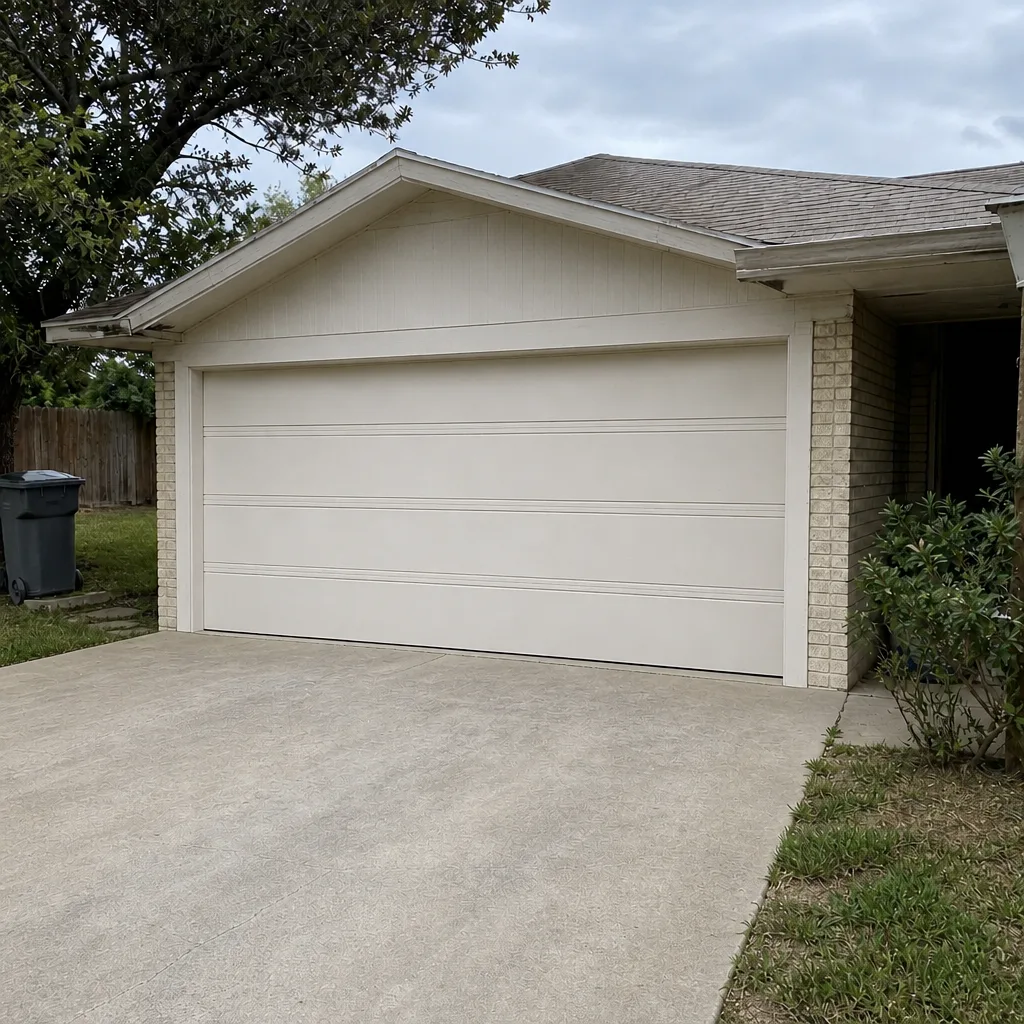
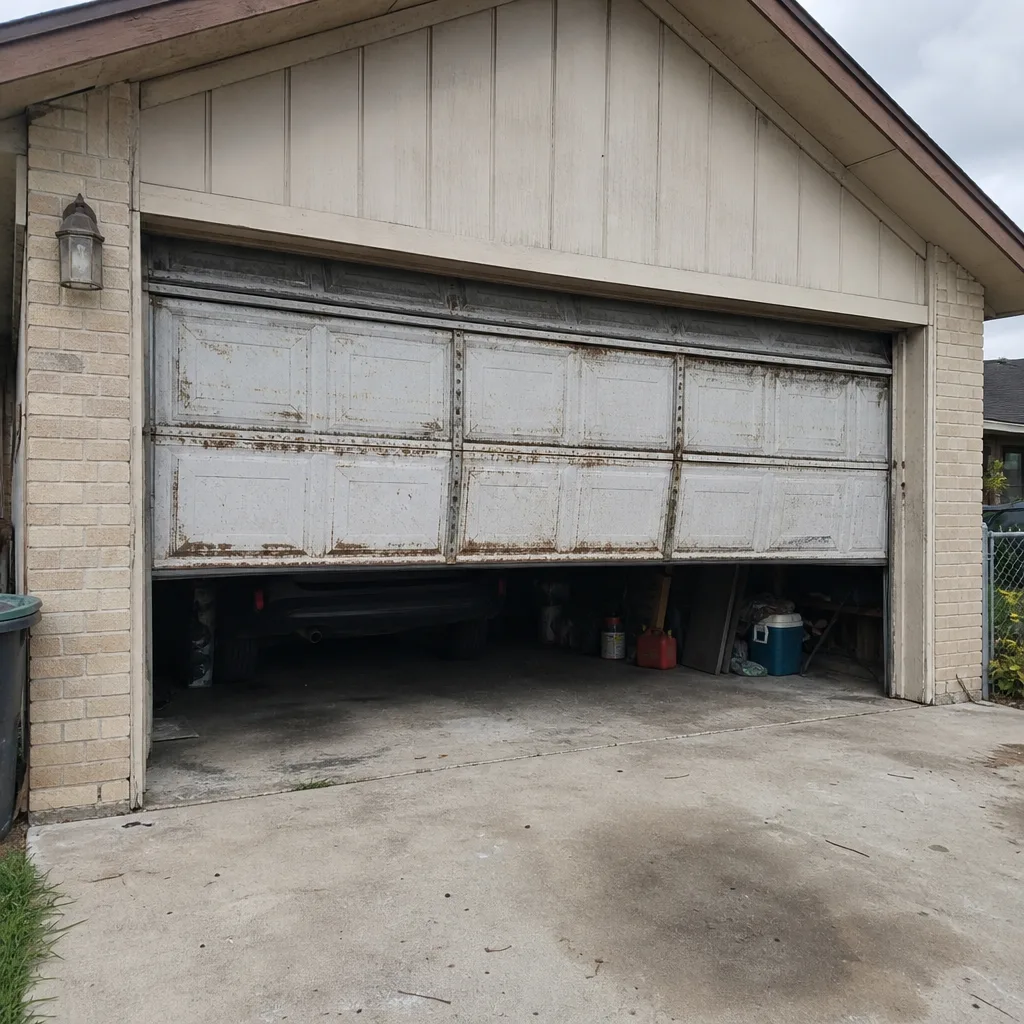
See the difference
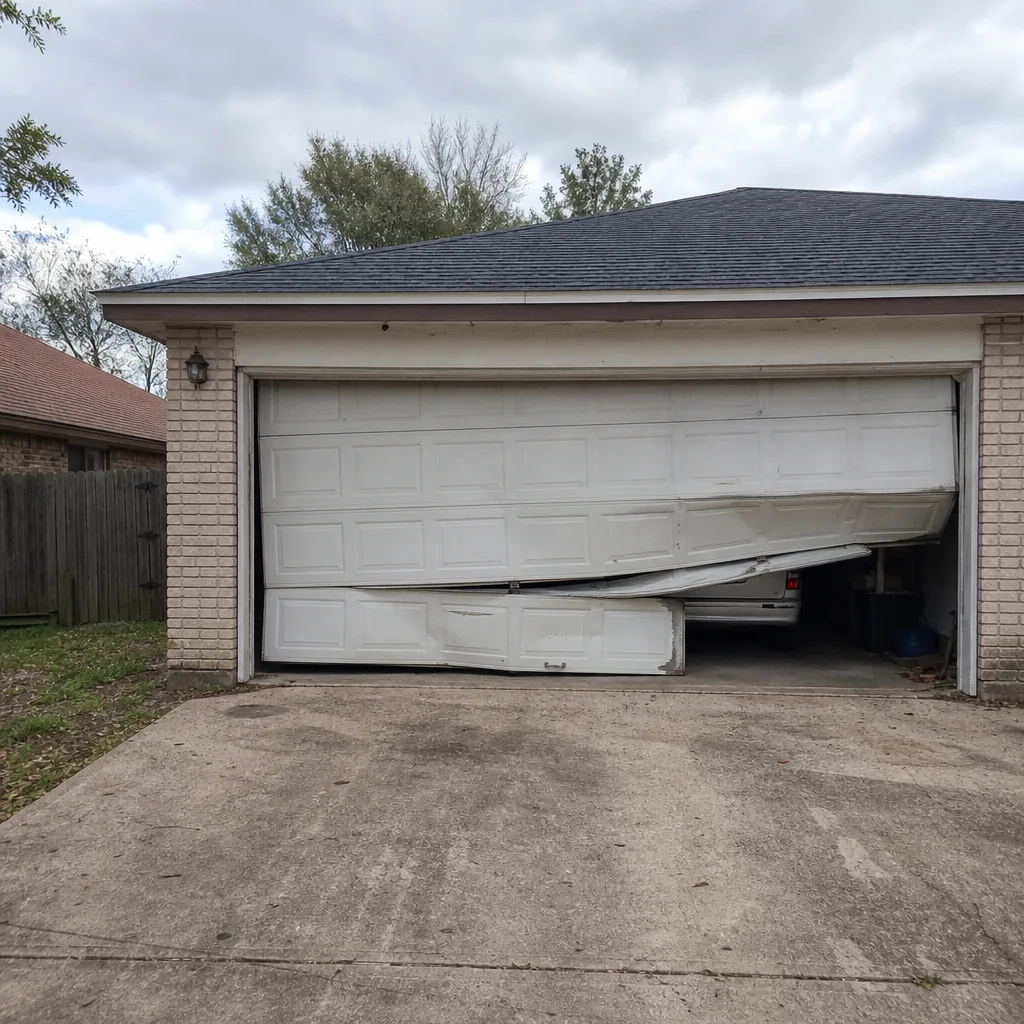 Before
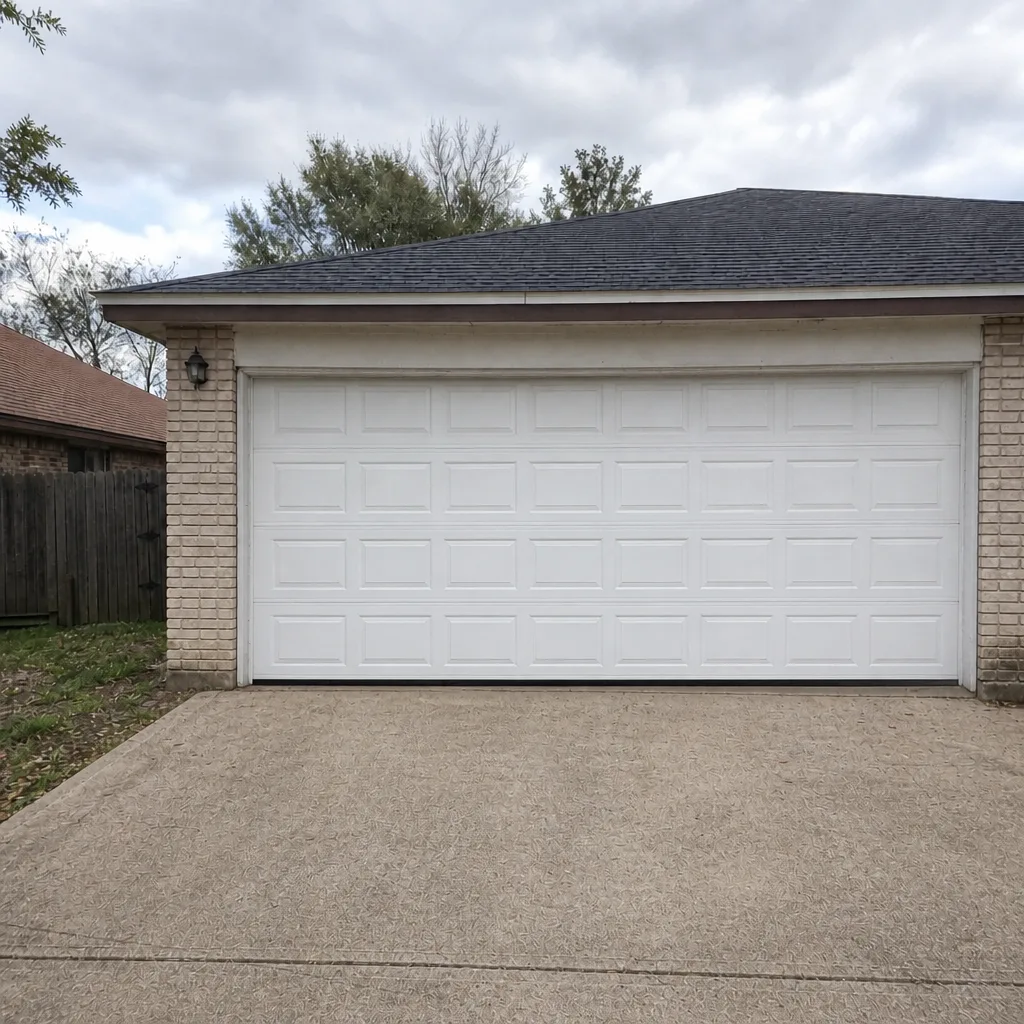 After
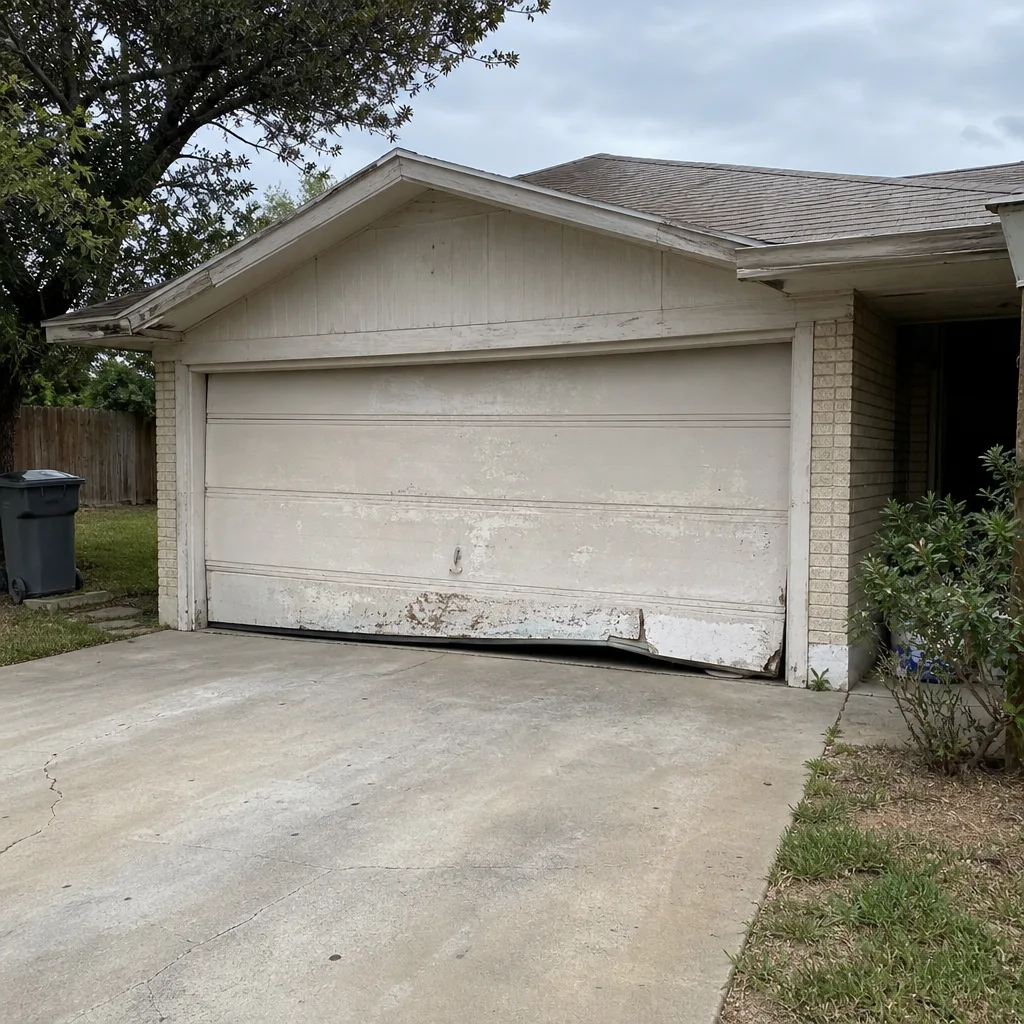 Before
 After
 Before
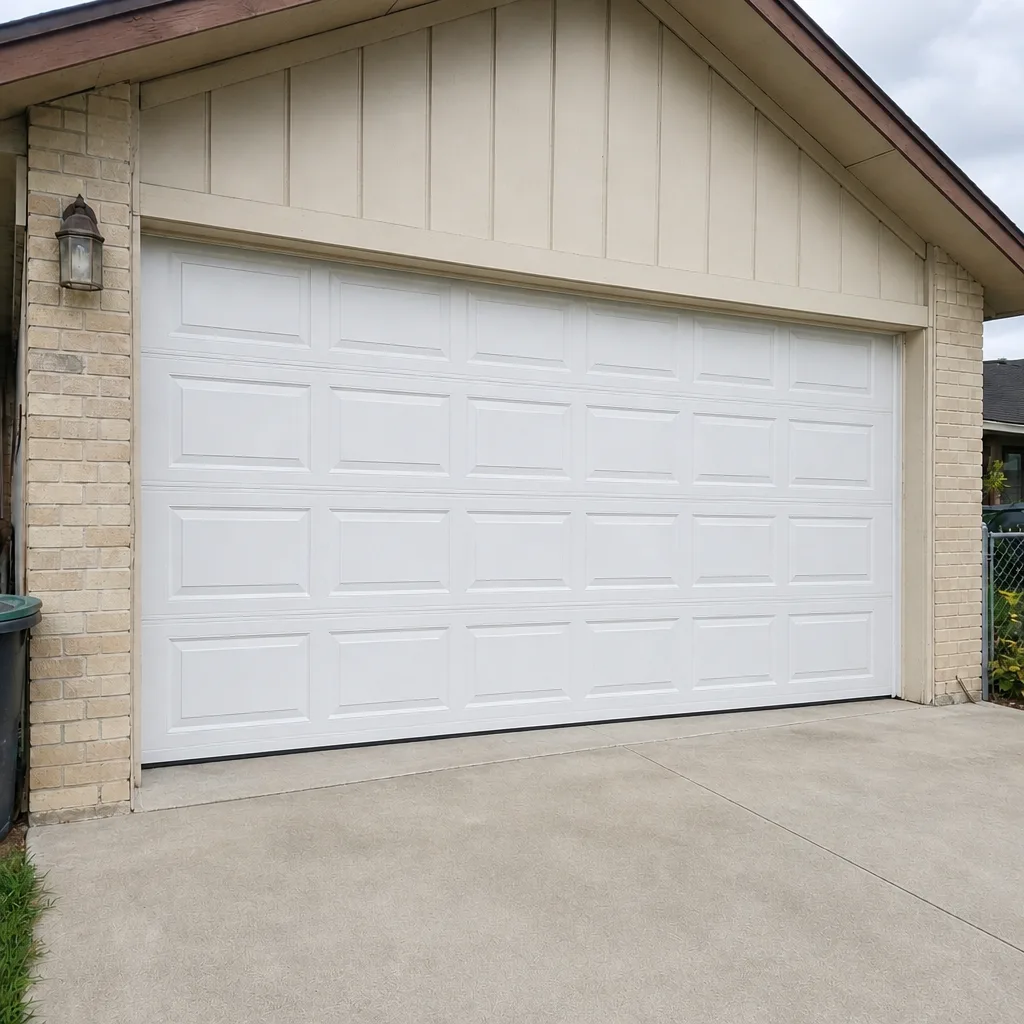 After
When to Call a Professional
Some situations aren’t a maintenance question. Call a professional when the balance test fails consistently, when you see a frayed cable or a gap in the spring coils, when the door reverses on its own or refuses to reverse, when the opener runs but the door doesn’t move, or when the door is visibly out of the track. Those signals mean a part is already worn or failing, and continuing to use the door makes it worse. The springs and cables in particular are dangerous to handle, and no maintenance schedule asks you to. If your door has been through a storm and doesn’t look the same, that’s also a call. Polaris Garage Door Repair offers free estimates in McAllen – call (866) 285-4210. We answer 24/7. Fast dispatch from 7am to 7pm, Sunday through Friday. A call outside dispatch hours is booked into the next opening.
Frequently Asked Questions
Check the door monthly yourself, do a deeper seasonal pass in April before the summer heat and in November after storm season, and get one professional inspection a year. If your door runs more than about 2,000 cycles a year, plan on professional visits more often. The cycle count matters more than the month on the calendar.
No. Garage door springs and cables are under high tension, and adjusting or replacing them without training can cause serious injury. You can safely test the balance of the door by hand and note what you see, but the spring and cable work belongs to a trained professional. Call (866) 285-4210 if you suspect a spring problem – estimates are free.
A purpose-made spring lubricant or a light silicone spray. Not a heavy grease, and not an all-purpose spray. The springs need to move freely without holding grit, and the tracks stay dry. If you’re unsure what’s safe for your door, a quick call to an opener repair technician can tell you before you spray.
Look for flat spots, cracks or a roller that wobbles in its bracket. You may also hear a rumble or feel the door hesitate. Worn rollers are cheap to replace and expensive to ignore, because they chew up the hinges and the track. A professional inspection catches them early, and a Polaris Garage Door Repair visit is the fastest way to know for sure.
Yes. Summer heat dries out lubricant and expands the metal, which puts extra stress on the springs and the opener. That’s why April is a critical inspection month in Doolittle and across McAllen – you want the door in good shape before the heat arrives, not after something fails.
The homeowner check is the monthly visual sweep, the balance test, the safety reverse test and the lubrication. The professional inspection covers the parts that need tools and training: spring tension, cable wear, roller and hinge wear, opener adjustment and track alignment. Both belong in the schedule. One doesn’t replace the other.
The Bottom Line
A garage door maintenance schedule works when it’s built around your door, not a generic calendar. Count your cycles, run the monthly homeowner checks, hit the April and November windows that matter in McAllen, and book one professional inspection a year for the parts that need a trained eye. Match the lubricant to each component, keep a log, and stay away from the springs and cables. Do that, and repairs stay small and predictable. Skip it, and they tend to arrive all at once. Call (866) 285-4210 for a free estimate, and we’ll help you get your door on the right schedule.
Written by the team at Polaris Garage Door Repair.